Toyota is one of the most recognized automobile manufacturers in the world. When people hear the name Toyota, they may think of reliability, family cars, hybrid technology, SUVs, pickup trucks, sports cars or luxury vehicles.
But Toyota’s journey did not begin with today’s sophisticated hybrid and electric cars.
The story began in Japan in the early twentieth century, when the Toyoda family was involved in textile machinery. The company later moved into automobile manufacturing, eventually creating vehicles that would become famous around the world.
Toyota’s automobile journey includes legendary names such as the Model AA, Crown, Corolla, Land Cruiser, Hilux, Celica, Supra, Camry, Prius, RAV4, Lexus LS, GR Yaris and bZ4X.
Over time, Toyota developed from a Japanese automobile manufacturer into a global company with factories, research centres and customers across the world.
Today, Toyota is working on multiple types of vehicle technology, including gasoline engines, hybrids, plug-in hybrids, battery-electric vehicles and hydrogen fuel-cell vehicles.
This article explains the complete evolution of Toyota cars in a simple way, from the company’s beginnings to the advanced vehicles of today’s automotive era.
Toyota at a Glance
Company: Toyota Motor Corporation
Country: Japan
Automotive department established: 1933
First Toyota passenger car: Toyoda Model AA, 1936
Toyota Motor Co. established: 1937
Famous models: Corolla, Crown, Camry, Land Cruiser, Hilux, RAV4, Prius, Supra, GR Yaris and many others
Major technologies: Hybrid, plug-in hybrid, battery electric, hydrogen fuel cell and advanced driver-assistance systems
Modern direction: Electrification, connected vehicles, software, artificial intelligence, carbon neutrality and advanced mobility
Toyota’s official history says Kiichiro Toyoda established an automotive department within Toyoda Automatic Loom Works in 1933, beginning the company’s serious move into automobile manufacturing.
1. Before Toyota Cars: The Toyoda Family and Textile Machinery
[IMAGE 1 HERE — Early Toyoda Automatic Loom Works / historical factory]
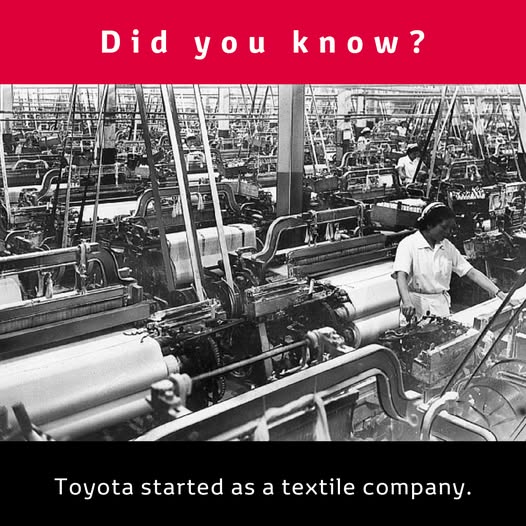
Before Toyota became a car company, the Toyoda family was involved in textile machinery.
Sakichi Toyoda developed automatic looms, and the business became successful in Japan.
His son, Kiichiro Toyoda, became interested in automobiles and believed that automobile manufacturing could become an important industry.
This decision would eventually change the company’s future.
Instead of remaining only a textile-machinery manufacturer, the Toyoda organization began investing in automotive engineering.
This was the beginning of Toyota’s transformation.
Why this stage is important
Readers often know Toyota only as a car company.
However, understanding its industrial background explains why engineering, manufacturing efficiency and quality became so important to Toyota.
2. Toyota Enters the Automobile Industry — 1933
[IMAGE 2 HERE — Kiichiro Toyoda / early Toyota automobile workshop]
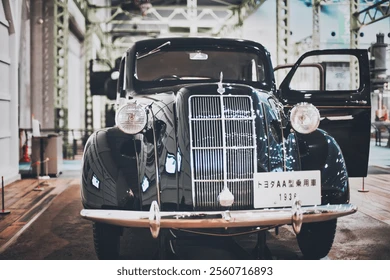
In 1933, Kiichiro Toyoda established an automobile department within Toyoda Automatic Loom Works.
The company began researching engines and automobile technology.
Engineers studied foreign automobiles and developed their own knowledge of engines, chassis and manufacturing.
This period was not about creating a globally famous Toyota yet.
It was about learning how to build automobiles.
The company had to develop the engineering knowledge required for:
- Engines
- Transmissions
- Chassis
- Body construction
- Manufacturing
- Vehicle testing
- Mass production
This research eventually resulted in Toyota’s first passenger car.
3. Toyota Model G1 Truck — 1935
[IMAGE 3 HERE — Toyoda Model G1 Truck]
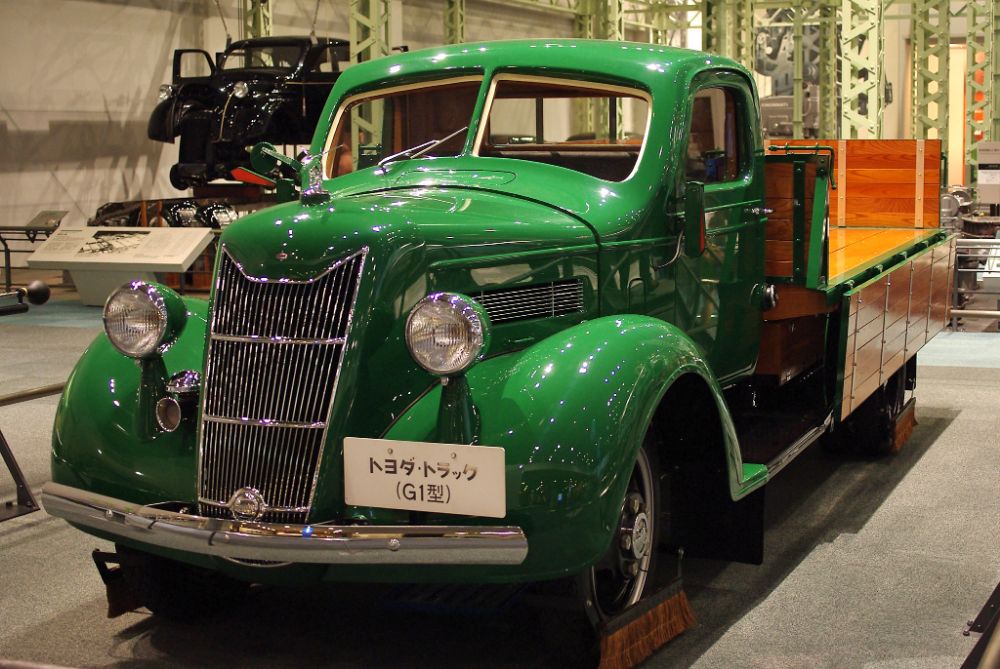
Before the first Toyota passenger car, the company introduced the Toyoda Model G1 truck in 1935.
This was an important milestone because it demonstrated that Toyoda could design and manufacture a complete motor vehicle.
The Model G1 helped the company gain practical experience in automobile production.
It also prepared the company for its next major milestone.
4. Toyoda Model AA — 1936
[IMAGE 4 HERE — Toyoda Model AA — LARGE HERO HISTORICAL IMAGE]
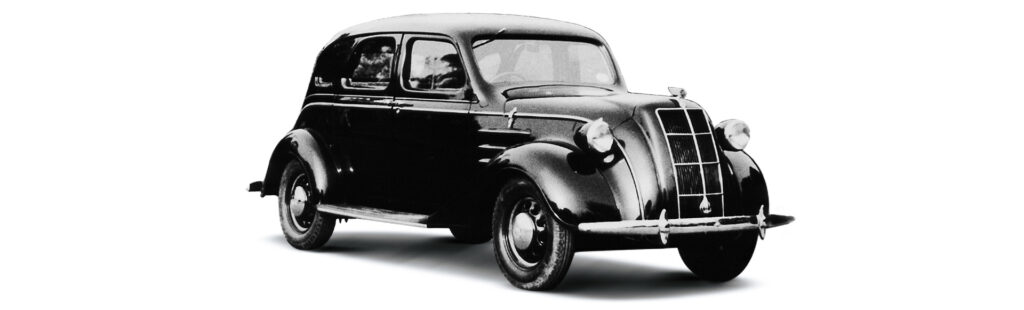
The Toyoda Model AA, introduced in 1936, was Toyota’s first production passenger car.
This vehicle is one of the most important automobiles in Toyota history.
The Model AA was designed as a large passenger vehicle for its time.
Its streamlined styling reflected contemporary automotive design.
The car represented Toyota’s transition from an organization experimenting with automobile engineering to a real automobile manufacturer.
Toyota’s official history identifies the Model AA as its first production passenger vehicle.
Why the Model AA matters
When you write your blog, make this a major historical section.
The Model AA is effectively the starting point of Toyota’s passenger-car story.
Recommended caption:
“The Toyoda Model AA, introduced in 1936, was Toyota’s first production passenger car.”
Suggested alt text:
“Toyoda Model AA first Toyota passenger car from 1936”
5. Toyota Motor Co. — 1937
[IMAGE 5 HERE — Toyota Motor Company early factory]
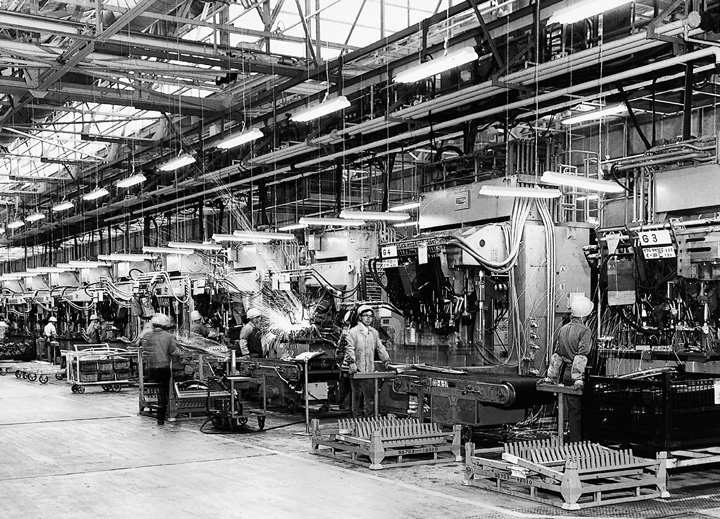
In 1937, Toyota Motor Co., Ltd. was established.
The company began developing a more organized automobile manufacturing operation.
The Koromo Plant, later known as the Toyota Honsha Plant, became an important part of Toyota’s manufacturing history.
Toyota’s development was now moving from experimental automobile production toward industrial-scale vehicle manufacturing.
This was an important foundation for the company’s later global expansion.
6. Toyota After World War II
[IMAGE 6 HERE — Toyota post-war factory / early Toyota cars]
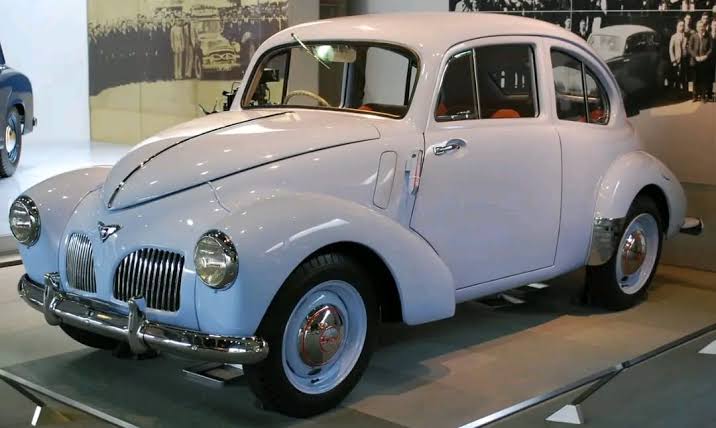
After World War II, Toyota faced major economic and industrial challenges.
Japan needed affordable transportation and industrial recovery.
Toyota had to learn how to manufacture vehicles efficiently while dealing with limited resources.
This environment contributed to Toyota’s strong focus on efficiency and waste reduction.
Eventually, Toyota developed the production philosophy that became famous around the world as the Toyota Production System.
7. Toyota Production System
[IMAGE 7 HERE — Toyota factory production line]

Toyota’s manufacturing philosophy became one of its most influential contributions to the global automobile industry.
The Toyota Production System emphasizes concepts such as:
- Eliminating waste
- Continuous improvement
- Quality control
- Efficient production
- Just-in-time manufacturing
- Problem solving
- Respect for people
The philosophy became closely associated with the Japanese concept of Kaizen, meaning continuous improvement.
This manufacturing approach helped Toyota produce vehicles efficiently while maintaining consistent quality.
It also became a subject of study for companies outside the automobile industry.
8. Toyota Crown — 1955
[IMAGE 8 HERE — First-generation Toyota Crown]
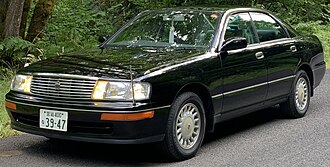
The Toyota Crown became one of Toyota’s most important early passenger cars.
Introduced in 1955, it was designed as a higher-level passenger vehicle for the Japanese market.
The Crown became a long-running Toyota nameplate and eventually developed into a global premium-oriented family of vehicles.
Toyota’s 2025 integrated report identifies the Toyopet Crown launch in 1955 as one of the major milestones in its history.
Why the Crown matters
The Crown showed that Toyota was capable of producing more than basic transportation.
It demonstrated Toyota’s ambitions in comfort, quality and premium automobile engineering.
9. Toyota Enters International Markets
[IMAGE 9 HERE — Early Toyota vehicles exported overseas]

During the 1950s and 1960s, Toyota began expanding outside Japan.
The company entered international markets and gradually developed a global presence.
The challenge was significant.
Toyota had to understand different:
- Roads
- Regulations
- Customer expectations
- Fuel requirements
- Climate conditions
- Driving habits
Toyota’s ability to adapt its vehicles to different markets became one of the reasons for its global growth.
10. Toyota Corolla — 1966
[IMAGE 10 HERE — First-generation Toyota Corolla]
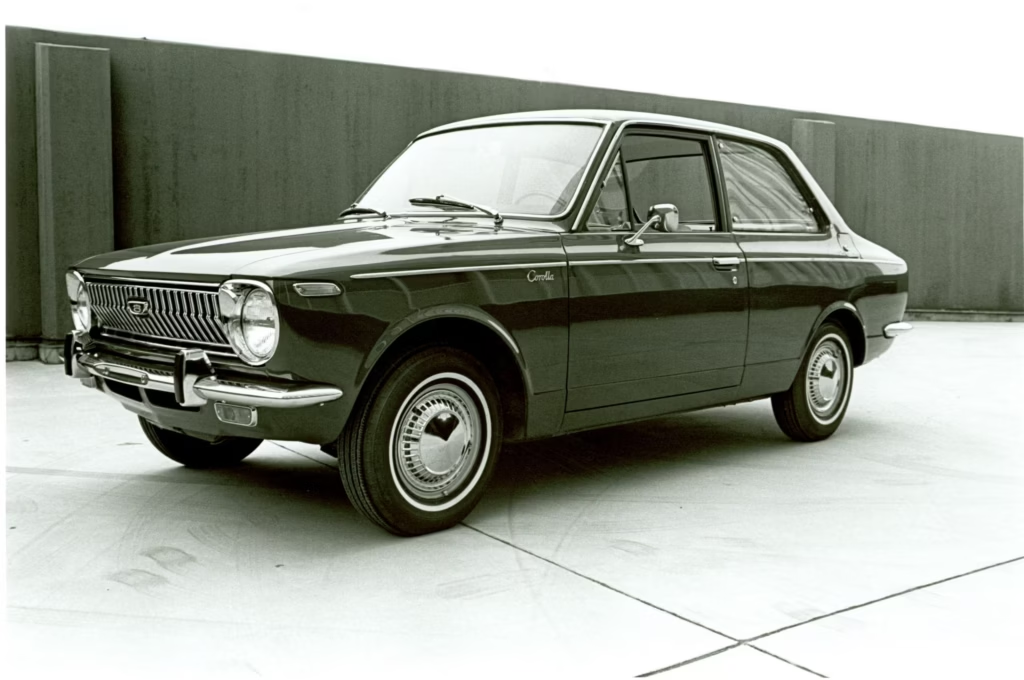
One of the most important moments in Toyota history came in 1966 with the introduction of the Corolla.
The Corolla was designed as an affordable, practical and reliable family car.
It became one of the most successful automobile nameplates in history.
Toyota says that the Corolla has sold more than 57 million units cumulatively and is sold in more than 150 countries and regions. In 2026, Toyota celebrated the Corolla’s 60th anniversary.
Why Corolla became so successful
The formula was simple:
Affordable + Practical + Reliable + Efficient + Easy to own
The Corolla became a family car for millions of people.
It was not necessarily designed to be the most exciting car in the world.
Its strength was its ability to satisfy everyday transportation needs.
That is exactly why it became so important.
11. Toyota 2000GT — 1967
[IMAGE 11 HERE — Toyota 2000GT — LARGE LUXURY/SPORTS IMAGE]
The Toyota 2000GT represented a completely different side of Toyota.
It was a beautiful Japanese sports car with elegant styling and sophisticated engineering.
The 2000GT demonstrated that Toyota could produce a car aimed at enthusiasts and collectors.
The car eventually became one of the most famous classic Japanese sports cars.
It helped change international perceptions of Japanese automotive engineering.
Blog placement
Place this image after the Corolla section to show readers that Toyota was not only interested in affordable family cars.
12. Toyota Land Cruiser — The Legend of Off-Road Reliability
[IMAGE 12 HERE — Classic Toyota Land Cruiser]

The Land Cruiser is one of Toyota’s most famous names.
It developed a reputation for durability and off-road capability.
The Land Cruiser became important in regions where vehicles had to survive:
- Rough roads
- Desert conditions
- Mountains
- Extreme climates
- Long distances
- Heavy workloads
It became associated with reliability and toughness.
Unlike a luxury vehicle designed mainly for city driving, the Land Cruiser built its reputation through demanding environments.
Over generations, it evolved from a rugged utility vehicle into both an off-road machine and a luxury SUV, depending on the version and market.
Image recommendation
Use a photograph of an old Land Cruiser followed by a modern Land Cruiser.
Caption:
“From rugged utility vehicle to modern luxury SUV, the Land Cruiser has become one of Toyota’s most recognizable names.”
13. Toyota Celica — 1970
[IMAGE 13 HERE — First-generation Toyota Celica]
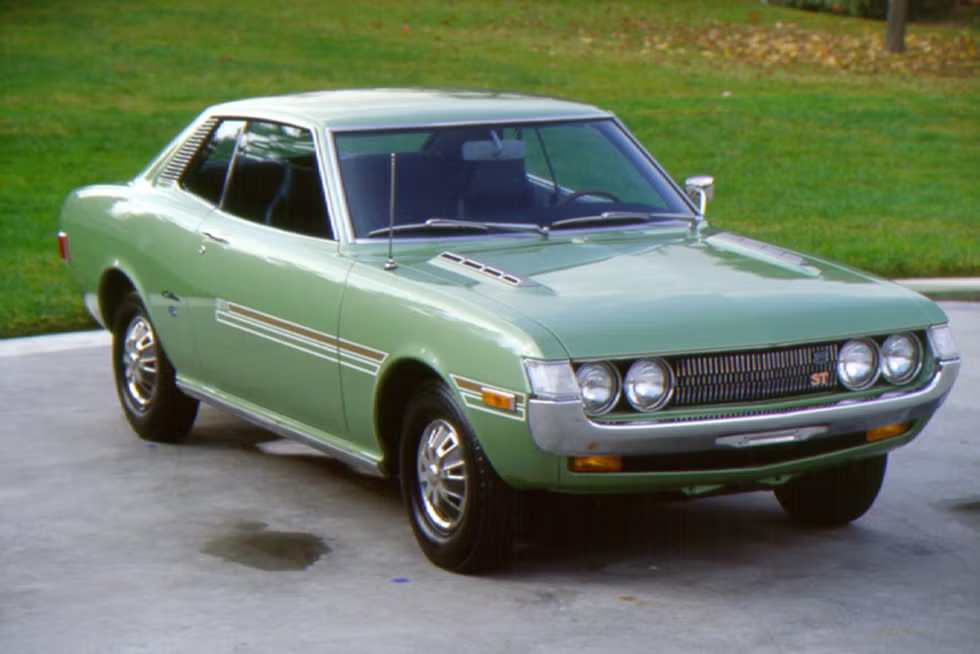
The Toyota Celica was introduced in 1970.
It became one of Toyota’s best-known sporty cars.
The Celica was designed to provide sporty styling and enjoyable performance at a relatively accessible price.
It became particularly popular among younger drivers and enthusiasts.
The Celica also developed an important connection with motor-sport.
14. Toyota Supra — The Performance Icon
[IMAGE 14 HERE — Classic Toyota Supra A80]
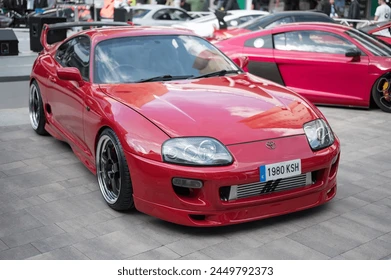
The Toyota Supra eventually became one of Toyota’s most famous performance names.
The fourth-generation Supra, known as the A80, became especially famous for its powerful turbocharged engine and tuning potential.
It became an icon among car enthusiasts.
The Supra gained even greater cultural recognition through popular movies, video games and car culture.
Why Supra became legendary
The Supra became associated with:
- Turbocharged performance
- Rear-wheel drive
- Modification
- Tuning
- Motorsport
- Japanese performance culture
Toyota later revived the Supra name for the modern era.
15. Toyota Camry — The Global Family Sedan
[IMAGE 15 HERE — Early and modern Toyota Camry side-by-side]
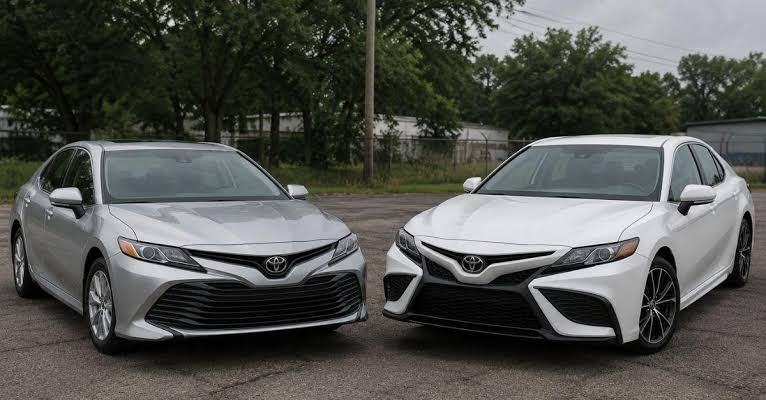
The Toyota Camry became one of the company’s most important family and executive sedans.
It focused on:
- Comfort
- Reliability
- Practicality
- Fuel efficiency
- Everyday usability
The Camry became especially successful in North America.
For many families, the Camry represented dependable transportation without unnecessary complexity.
Its reputation helped Toyota establish itself as a major global manufacturer.
16. Toyota Hilux — The Global Pickup
[IMAGE 16 HERE — Classic and modern Toyota Hilux]
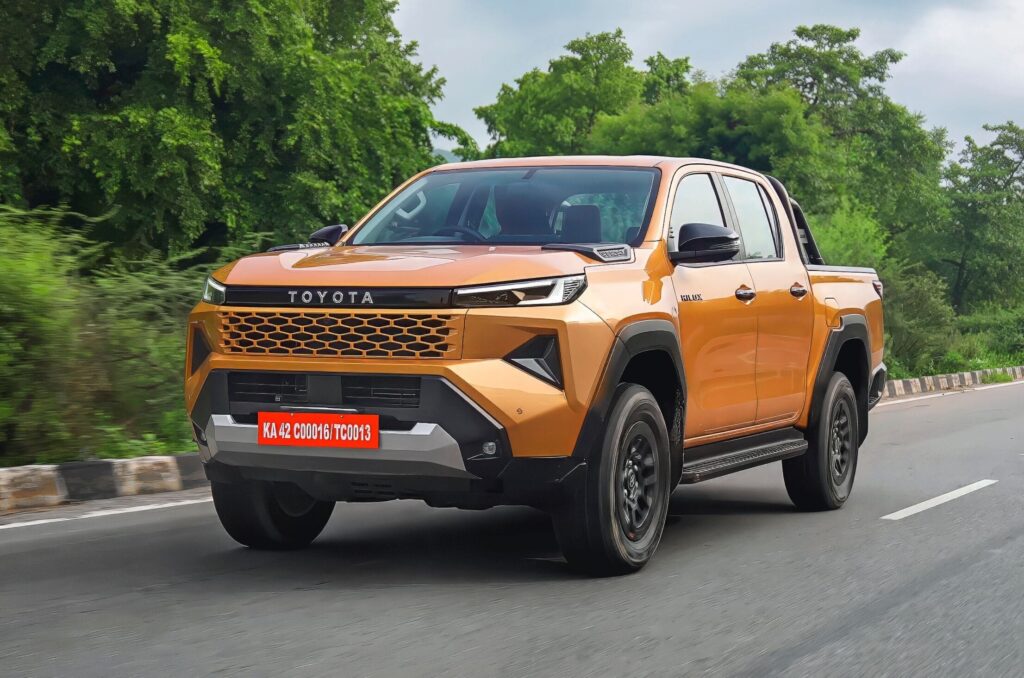
The Toyota Hilux became famous for its durability.
It is a pickup truck designed for practical work as well as personal use.
The Hilux has been used in many different environments around the world.
It became particularly popular in regions where ruggedness and reliability were important.
The Hilux represents another important Toyota philosophy:
Build a vehicle that can survive difficult conditions.
17. Toyota RAV4 — Creating the Modern Compact SUV
[IMAGE 17 HERE — First-generation Toyota RAV4]
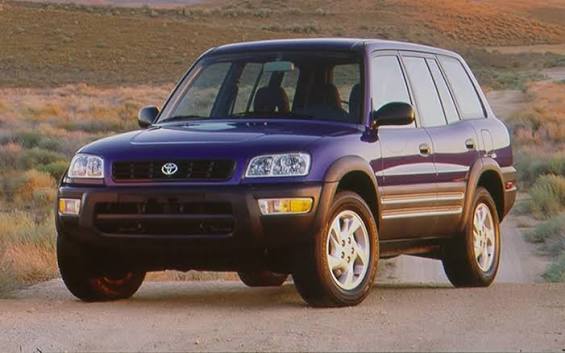
The first-generation Toyota RAV4 arrived in the 1990s.
It helped establish the compact SUV category.
The RAV4 combined elements of:
- Passenger cars
- SUVs
- Practical family vehicles
- Four-wheel-drive vehicles
It offered a higher seating position and greater practicality without the size of a traditional large SUV.
Today, the RAV4 is one of Toyota’s most important global vehicle families.
18. Lexus — Toyota Enters the Luxury Market
[IMAGE 18 HERE — Lexus LS 400 / Toyota luxury history]
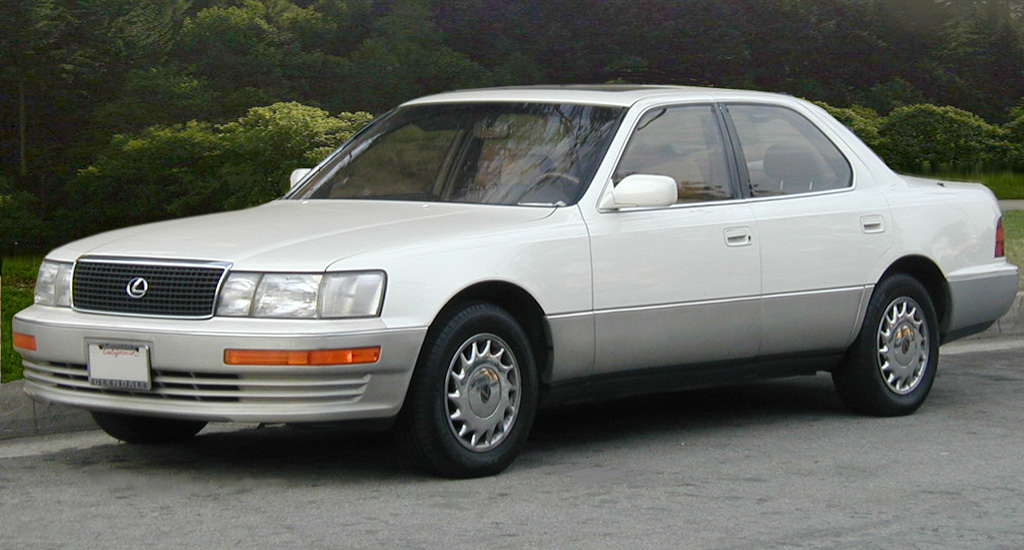
Toyota created the Lexus luxury brand to compete in the global premium automobile market.
The Lexus LS 400 was introduced in 1989.
Toyota’s goal was to create a luxury vehicle capable of competing with established European and American luxury brands.
The LS focused heavily on:
- Quietness
- Comfort
- Engineering
- Quality
- Smoothness
- Attention to detail
Toyota’s 2025 integrated report lists the launch of the Lexus LS400 in 1989 as a major milestone.
This was a major expansion of Toyota’s identity.
Toyota could now compete not only in mainstream vehicles but also in the luxury segment.
19. Toyota Prius — The Hybrid Revolution
[IMAGE 19 HERE — First-generation Toyota Prius]
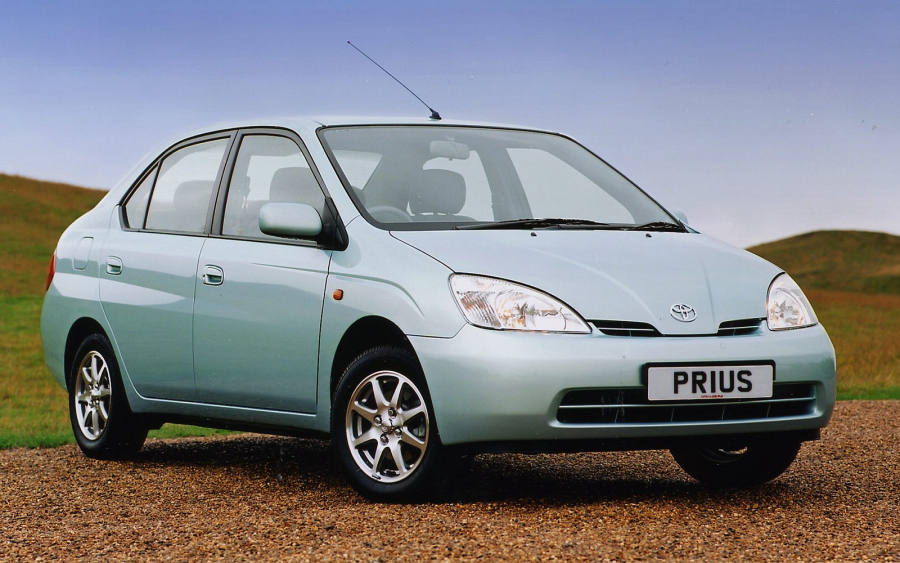
One of the most important cars in modern automotive history is the Toyota Prius.
The first-generation Prius was launched in 1997.
It became one of the world’s best-known hybrid cars.
Instead of relying only on a gasoline engine, the Prius combined:
Gasoline engine + electric motor + battery
The system could use electric power under appropriate conditions and recover energy through regenerative braking.
The Prius helped make hybrid technology familiar to millions of drivers.
Toyota’s official history lists the Prius launch in 1997 as one of its major milestones.
20. Why the Prius Changed the Car Industry
[IMAGE 20 HERE — Prius hybrid system / modern Prius]
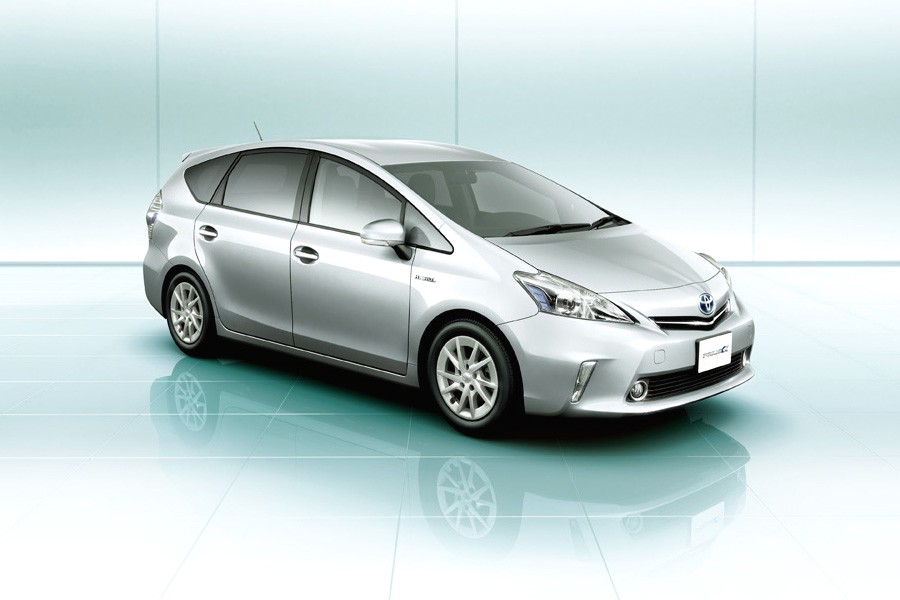
Before the Prius became popular, many people thought electric propulsion was only for experimental or niche vehicles.
Toyota demonstrated that hybrid technology could be used in a practical everyday car.
The Prius became associated with:
- Fuel efficiency
- Lower emissions
- Hybrid technology
- Environmental awareness
- Innovative engineering
The success of Prius encouraged other manufacturers to develop their own hybrid vehicles.
This was one of Toyota’s biggest technological contributions to modern automotive history.
21. Toyota Expands Its SUV Range
[IMAGE 21 HERE — Toyota SUV family: RAV4, Fortuner, Land Cruiser, Highlander etc.]
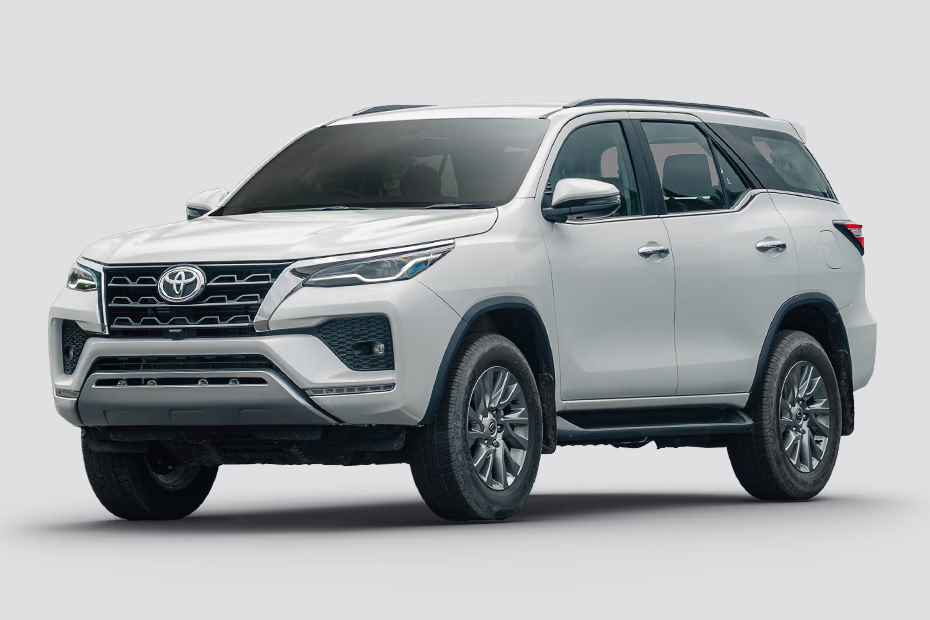
During the 2000s and 2010s, SUVs became increasingly popular around the world.
Toyota expanded its SUV portfolio with models such as:
- RAV4
- Highlander
- Fortuner
- 4Runner
- Land Cruiser
- Land Cruiser Prado
- Sequoia
Each model targeted different customer requirements.
Some focused on family comfort.
Others emphasized off-road capability.
This allowed Toyota to compete in multiple SUV categories.
22. Toyota Fortuner
[IMAGE 22 HERE — Toyota Fortuner]
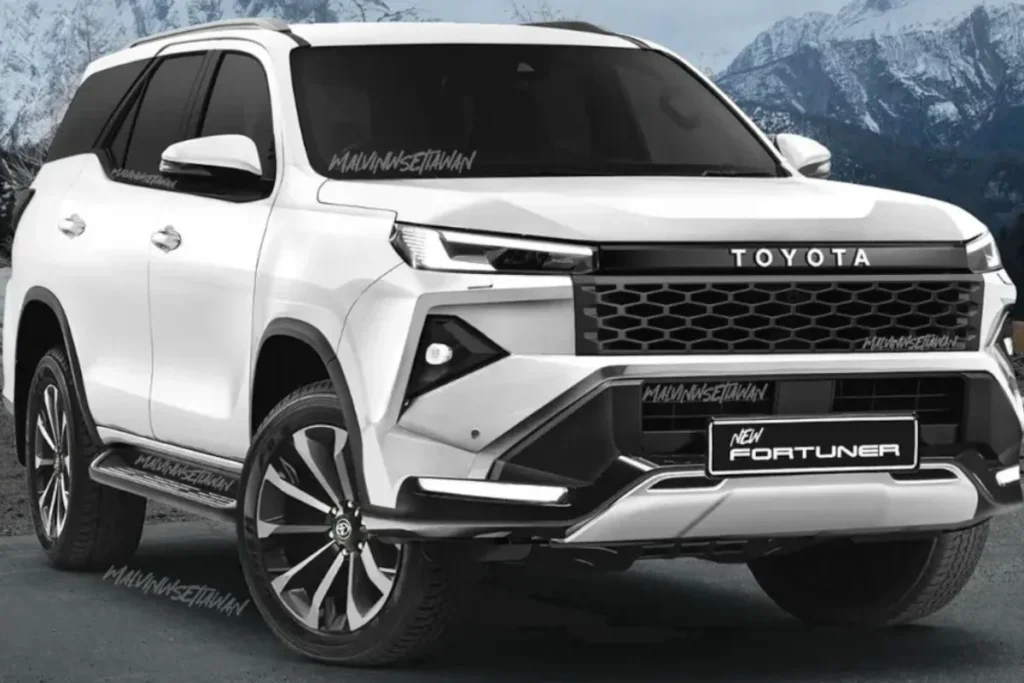
The Toyota Fortuner became particularly important in several Asian markets.
It combined SUV styling with a rugged platform and practical interior.
It became popular among families and customers looking for a vehicle suitable for both city roads and challenging terrain.
The Fortuner demonstrates Toyota’s ability to adapt products to regional market requirements.
23. Toyota GR — A New Performance Identity
[IMAGE 23 HERE — Toyota GR Yaris]
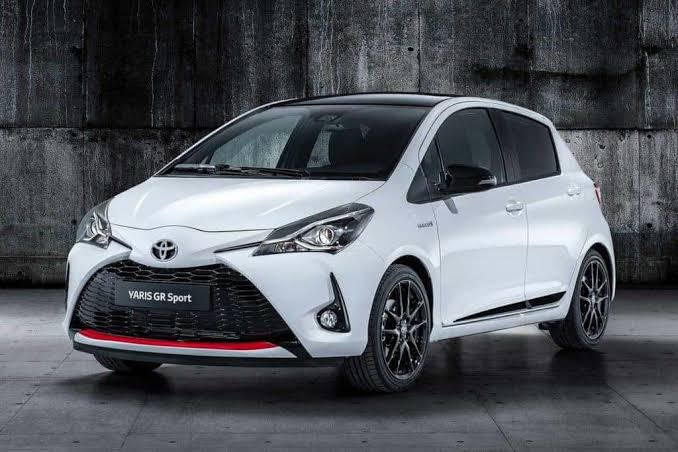
Toyota’s modern performance identity is represented by GR, meaning Gazoo Racing.
Motorsport became an important development laboratory for Toyota.
The company used competition experience to improve road cars.
The GR Yaris became one of the most exciting examples.
It was developed with strong connections to rally engineering.
24. GR Yaris — Small Car, Serious Performance
[IMAGE 24 HERE — GR Yaris — ACTION IMAGE]

The GR Yaris demonstrates that performance does not always require a large engine or huge vehicle.
It combines a compact body with serious performance engineering.
It has become especially popular among driving enthusiasts.
It represents Toyota’s modern philosophy of:
Motorsport technology + everyday usability + driving enjoyment.
25. Modern Toyota GR Supra
[IMAGE 25 HERE — Current Toyota GR Supra]
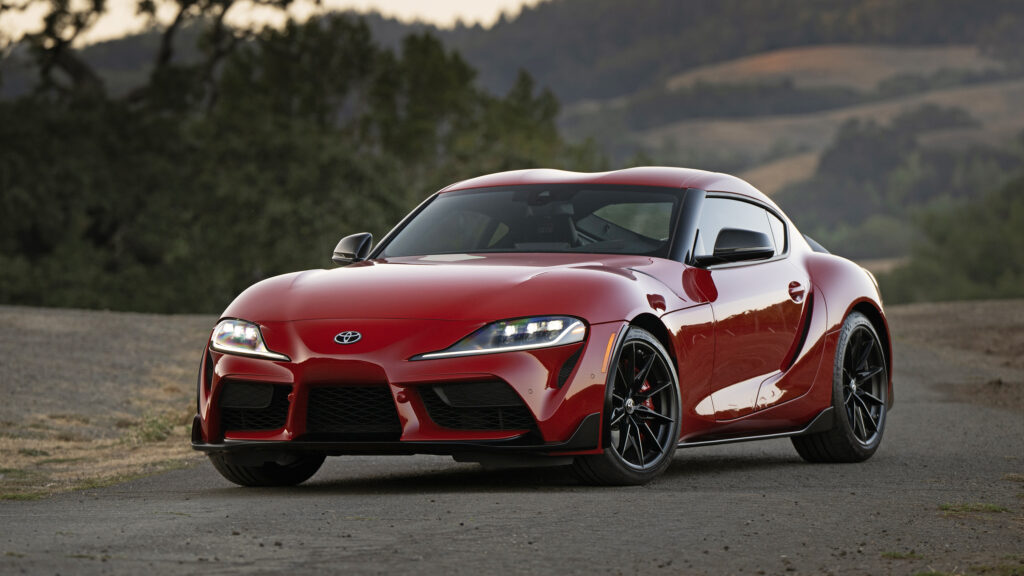
Toyota revived the Supra name for the modern performance-car era with the GR Supra.
The modern Supra combines:
- Rear-wheel drive
- Powerful engines
- Sports-car proportions
- Performance handling
- Modern electronics
The GR Supra represents the continuation of Toyota’s performance-car heritage into the modern era.
26. Toyota Enters the Hydrogen Era — Mirai
[IMAGE 26 HERE — Toyota Mirai]
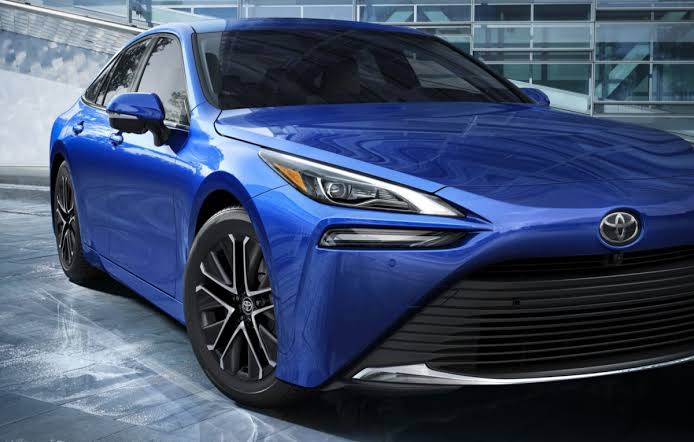
Toyota has not focused only on battery-electric vehicles.
It has also invested heavily in hydrogen fuel-cell technology.
The Toyota Mirai, launched in 2014, became one of the world’s best-known hydrogen fuel-cell passenger cars.
A fuel-cell vehicle uses hydrogen to generate electricity, which powers an electric motor.
The system produces water as the vehicle’s tailpipe emission.
Toyota’s integrated report identifies the Mirai’s 2014 launch as an important historical milestone.
27. Toyota’s Multi-Pathway Approach
[IMAGE 27 HERE — Toyota hybrid, plug-in hybrid, hydrogen and electric vehicles together]
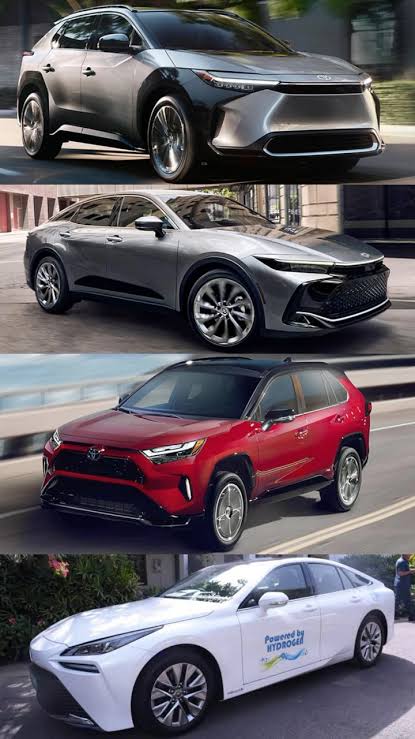
Toyota’s modern strategy is often described as a multi-pathway approach.
Instead of depending on only one technology, Toyota develops several powertrain types:
Hybrid
Gasoline engine + electric motor.
Plug-in Hybrid
Hybrid system with a larger battery that can be externally charged.
Battery Electric
Electric motor powered primarily by a large battery.
Hydrogen Fuel Cell
Hydrogen used to generate electricity for an electric motor.
Efficient Internal Combustion
Toyota continues improving combustion engines for markets where they remain important.
This approach is intended to allow different technologies to suit different markets and infrastructure conditions.
28. Toyota bZ4X — Toyota’s Modern Battery Electric SUV
[IMAGE 28 HERE — Toyota bZ4X]
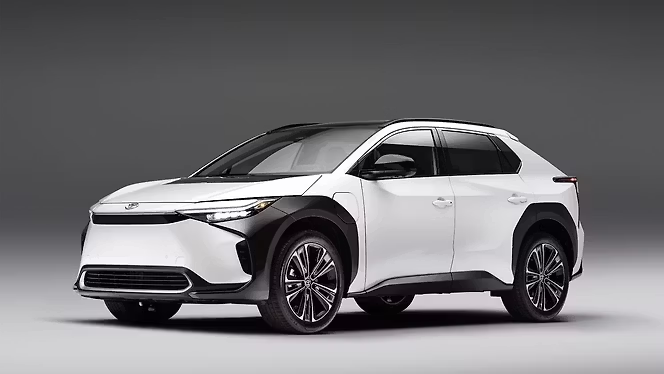
Toyota introduced the bZ4X as a dedicated battery-electric SUV.
The vehicle represented an important step in Toyota’s move toward battery-electric vehicles.
The bZ name represents Toyota’s beyond Zero electric-vehicle direction.
The vehicle combines:
- Battery-electric power
- SUV practicality
- Advanced driver assistance
- Modern connectivity
- Zero tailpipe emissions during driving
Toyota’s official history identifies the bZ4X launch in 2022 as an important milestone.
29. Toyota bZ4X Touring — 2026
[IMAGE 29 HERE — Toyota bZ4X Touring — LARGE MODERN IMAGE]
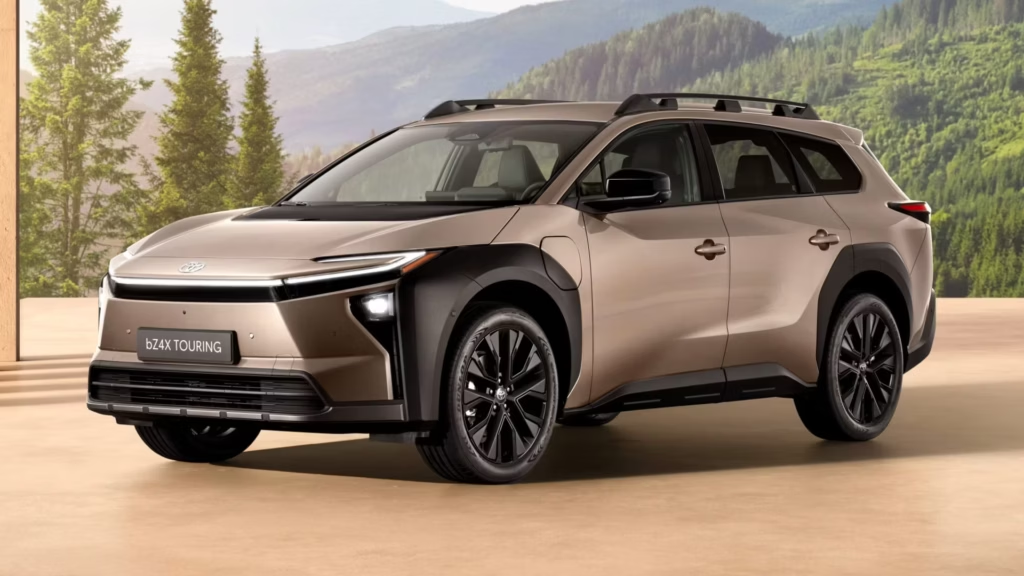
Toyota’s electric strategy has continued to expand.
In February 2026, Toyota launched the bZ4X Touring in Japan.
Toyota describes it as a battery-electric vehicle designed to combine driving performance, spaciousness and everyday practicality, particularly for family and outdoor activities.
This is an important development because it demonstrates Toyota’s attempt to make electric vehicles practical for a wider range of lifestyles.
Suggested caption
“Toyota expands its electric SUV family with the bZ4X Touring.”
30. Toyota Today — The Modern Global Lineup
[IMAGE 30 HERE — Modern Toyota lineup collage]
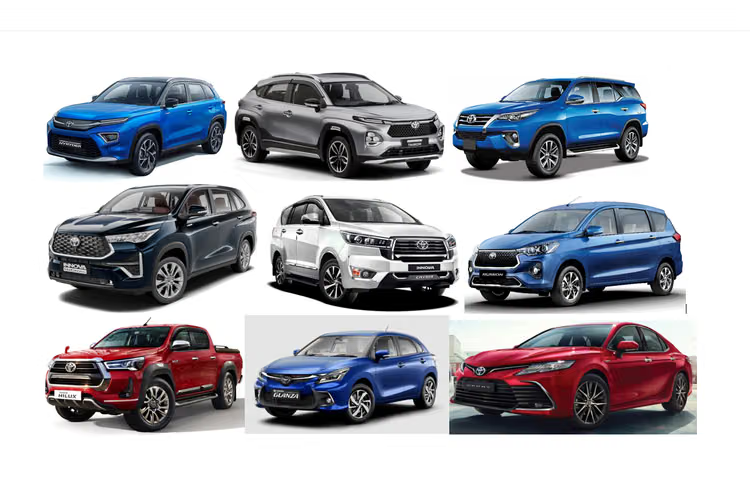
Today’s Toyota lineup is extremely broad.
Depending on the market, Toyota offers vehicles including:
- Corolla
- Camry
- Crown
- Prius
- RAV4
- Land Cruiser
- Hilux
- Yaris
- GR Yaris
- GR86
- GR Supra
- bZ4X
- Mirai
- Alphard
- Vellfire
- Sienta
- and many others
Toyota’s global vehicle gallery currently lists models including bZ4X, bZ4X Touring, Crown, Corolla, GR Yaris, GR86, Hilux, Land Cruiser, Mirai, Prius, RAV4 and Yaris.
The exact models available vary by country.
31. Toyota’s Most Famous Car Families
To make your blog easy for readers to understand, divide Toyota’s modern vehicles into categories.
Family and Everyday Cars
Corolla
Affordable, practical and globally recognized.
Camry
Comfortable executive/family sedan.
Yaris
Compact urban vehicle.
Prius
Hybrid technology icon.
32. Toyota’s SUV Family
RAV4
Compact family SUV.
Fortuner
Rugged SUV popular in several international markets.
Land Cruiser
Legendary off-road and luxury SUV family.
Highlander
Large family-oriented SUV in markets where offered.
4Runner
Rugged SUV with strong off-road heritage in markets where offered.
33. Toyota’s Performance Cars
[IMAGE 31 HERE — GR Yaris + GR Supra + GR86]
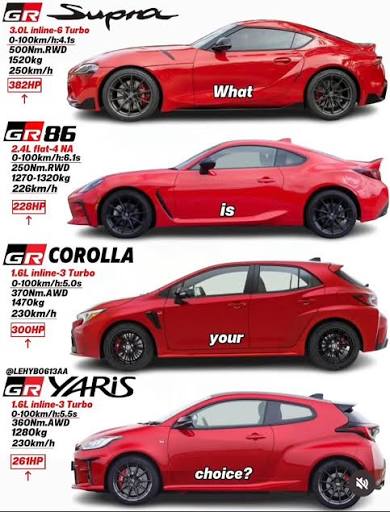
Toyota’s performance family includes:
GR Yaris
Compact rally-inspired performance car.
GR86
Lightweight rear-wheel-drive sports car.
GR Supra
High-performance sports car.
These vehicles demonstrate that Toyota is not only about fuel efficiency and practicality.
Toyota also has a strong enthusiast culture.
34. Toyota Land Cruiser: From Utility to Royal Luxury
[IMAGE 32 HERE — Classic Land Cruiser → modern Land Cruiser side-by-side]
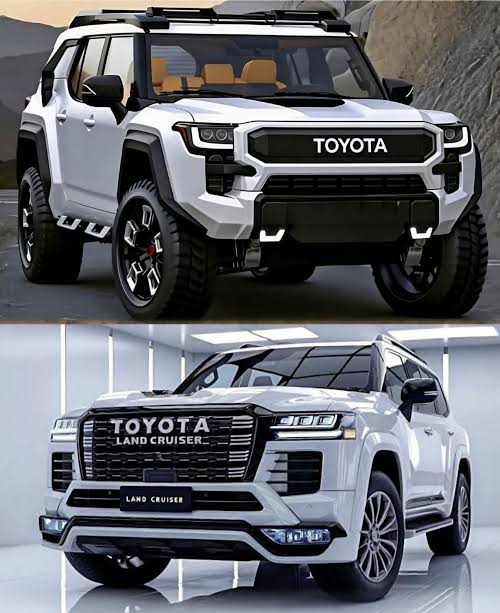
The Land Cruiser deserves its own section in your blog because it demonstrates Toyota’s transformation particularly well.
Early Land Cruisers were rugged utility vehicles.
They were built to survive demanding terrain.
Modern Land Cruiser models can combine:
- Off-road capability
- Premium interiors
- Advanced safety
- Modern infotainment
- Powerful engines
- Four-wheel-drive technology
- Luxury styling
This makes the Land Cruiser a fascinating example of Toyota combining its traditional toughness with modern luxury.
For the “royal” visual style you mentioned, this is one of the best Toyota sections to use a large image.
35. Toyota Crown — From Japanese Sedan to Modern Luxury Family
[IMAGE 33 HERE — Classic Crown → modern Crown Crossover/Sedan]
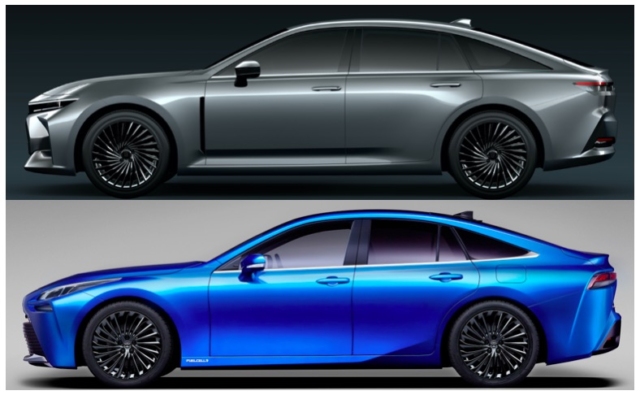
The Toyota Crown has evolved dramatically.
It began as a traditional Japanese sedan.
Modern Crown models use different body concepts, including crossover-style designs and premium sedans depending on market.
The Crown demonstrates Toyota’s ability to take a historic name and adapt it to changing customer preferences.
It is a particularly good model to include when discussing Toyota’s luxury direction.
36. Toyota’s Approach to Reliability
One of Toyota’s strongest global reputations is reliability.
This reputation did not come from one specific vehicle.
It developed through decades of:
- Manufacturing discipline
- Quality control
- Engineering
- Testing
- Continuous improvement
- Production-system development
Toyota’s philosophy of continuous improvement became one of the company’s defining characteristics.
For many customers, buying a Toyota is not only about the initial purchase.
It is about expecting the vehicle to remain useful for many years.
37. Toyota and Sustainability
[IMAGE 34 HERE — Toyota Prius + bZ4X + Mirai]
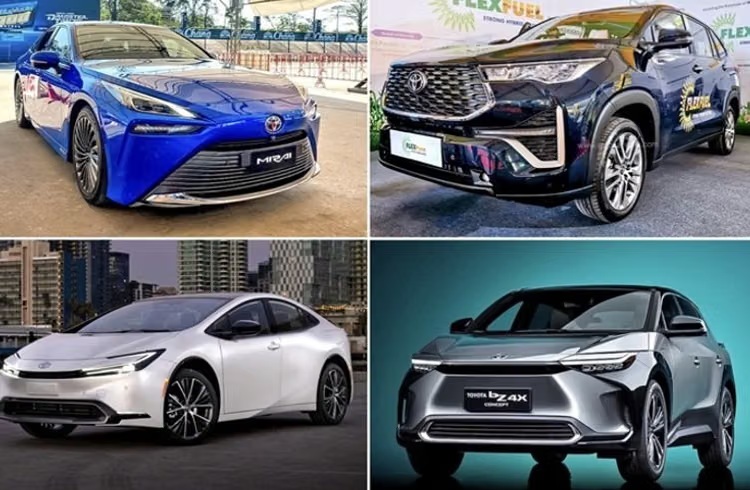
Toyota has increasingly focused on reducing environmental impact.
Its approach includes multiple technologies rather than relying on one solution.
The Prius demonstrated mainstream hybrid technology.
The Mirai demonstrated hydrogen fuel cells.
The bZ4X demonstrated battery-electric technology.
Newer Toyota electric vehicles continue expanding this strategy.
Toyota has also continued research into batteries, hydrogen, manufacturing efficiency and lower-carbon production.
38. Toyota’s Future
[IMAGE 35 HERE — Future Toyota electric vehicle / concept]
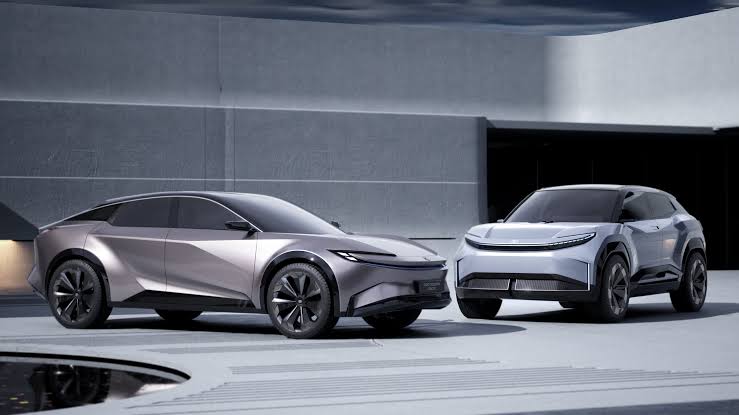
The future of Toyota will be strongly influenced by electrification and software.
The company is developing:
- Battery-electric vehicles
- Advanced batteries
- Hybrid technology
- Hydrogen fuel cells
- Connected vehicles
- Advanced driver assistance
- Software-defined vehicle technology
- Artificial intelligence
- New manufacturing methods
The goal is not simply to build electric versions of existing vehicles.
Toyota is working toward a broader transformation of the automobile into a connected and increasingly software-driven product.
39. Toyota’s Journey in Simple Form
The entire Toyota history can be remembered through a simple timeline:
1933
Automotive department established.
↓
1935
Toyoda Model G1 truck.
↓
1936
Toyoda Model AA passenger car.
↓
1937
Toyota Motor Co. established.
↓
1955
Toyota Crown.
↓
1966
Toyota Corolla.
↓
1967
Toyota 2000GT.
↓
1970
Toyota Celica.
↓
1970s–1980s
Global expansion and development of major passenger cars and SUVs.
↓
1989
Lexus LS 400.
↓
1990s
RAV4, Supra, expanding global operations.
↓
1997
Toyota Prius.
↓
2000s
Global expansion of Toyota SUVs, pickups and hybrid technology.
↓
2014
Toyota Mirai hydrogen fuel-cell vehicle.
↓
2020s
GR performance cars, bZ electric vehicles and expanded electrification.
↓
2026
bZ4X Touring and continuing expansion of Toyota’s electrified vehicle portfolio.
40. Recommended Image Timeline for Your Blog
To make your article look professional, use photographs in chronological order.
Image 1
Toyoda/Toyota factory
Place after the introduction.
Image 2
Toyoda Model G1 Truck — 1935
Place in the early history section.
Image 3
Toyoda Model AA — 1936
Make this one large.
Image 4
Toyota Crown — 1955
Place after the post-war section.
Image 5
Toyota Corolla — 1966
Use a large image because Corolla is one of Toyota’s most important models.
Image 6
Toyota 2000GT
Use a premium classic-car photograph.
Image 7
Toyota Land Cruiser
Show an old Land Cruiser.
Image 8
Toyota Celica
Place in the sports-car section.
Image 9
Toyota Supra
Use a classic A80 Supra.
Image 10
Toyota Hilux
Show an older and modern Hilux.
Image 11
Toyota RAV4
Show first generation and modern generation.
Image 12
Lexus LS 400
Place in the luxury section.
Image 13
First Toyota Prius
Use this for the hybrid revolution.
Image 14
Toyota Mirai
Use this for hydrogen technology.
Image 15
Toyota GR Yaris
Use an action photograph.
Image 16
GR Supra
Use a dramatic performance photograph.
Image 17
Toyota bZ4X
Use for Toyota’s electric era.
Image 18
bZ4X Touring — 2026
Use a large modern image.
Image 19
Modern Toyota lineup
Use near the conclusion.
41. How to Make Your Toyota Blog Look Royal and Premium
Since you want your Toyota article to have a royal and impressive appearance, don’t use ordinary small images throughout the page.
Use this structure:
BLACK/DARK HERO SECTION
Large Toyota image
↓
“The Complete History of Toyota Cars”
↓
Short introduction
↓
TIMELINE
1933 → 1936 → 1955 → 1966 → 1989 → 1997 → 2014 → 2022 → 2026
↓
Large historical photographs
↓
Classic cars
↓
Luxury cars
↓
SUVs
↓
Sports cars
↓
Hybrid cars
↓
Electric cars
↓
Future technology
This creates a much more premium reading experience.
42. Suggested SEO Title
Toyota Car History: Complete Evolution from 1936 to Today’s Advanced Cars
SEO Meta Description
Explore the complete history of Toyota cars from the 1936 Model AA to Corolla, Land Cruiser, Supra, Prius, Mirai, GR models and today’s advanced electric vehicles.
Suggested URL
/toyota-car-history-evolution/
Primary Keyword
Toyota car history
Secondary Keywords
- Toyota history
- Toyota car evolution
- history of Toyota cars
- Toyota first car
- first Toyota car
- Toyota Model AA
- Toyota Corolla history
- Toyota Land Cruiser history
- Toyota Supra history
- Toyota Prius history
- Toyota hybrid cars
- Toyota electric cars
- Toyota GR cars
- Toyota latest cars
- Toyota bZ4X
- Toyota 2026 cars
43. Suggested H1
Toyota Car History: The Complete Evolution from the First Toyota to Today’s Advanced Cars
Suggested H2 Structure
- Before Toyota Cars: The Toyoda Family
- Toyota Enters the Automobile Industry
- Toyoda Model G1 Truck
- Toyoda Model AA
- Toyota Motor Co.
- Toyota After World War II
- Toyota Production System
- Toyota Crown
- Toyota Goes Global
- Toyota Corolla
- Toyota 2000GT
- Toyota Land Cruiser
- Toyota Celica
- Toyota Supra
- Toyota Camry
- Toyota Hilux
- Toyota RAV4
- Lexus
- Toyota Prius
- Toyota Mirai
- Toyota GR Performance
- Toyota bZ4X
- Toyota bZ4X Touring
- Toyota’s Current Lineup
- Toyota’s Future
- Toyota Evolution Timeline
- Frequently Asked Questions
- Conclusion
Conclusion: The Extraordinary Evolution of Toyota Cars
Toyota’s history is the story of a company that continuously changed with the automobile industry.
It began with textile machinery.
It moved into automobile engineering.
It built the Toyoda Model G1 truck.
It introduced the Model AA.
It established Toyota Motor Co.
It developed the Crown.
It created the Corolla.
It built the legendary Land Cruiser.
It produced the 2000GT and Supra.
It expanded globally with the Camry, Hilux and RAV4.
It entered luxury automobiles through Lexus.
It changed the automotive industry with the Prius.
It explored hydrogen technology through Mirai.
It returned to performance with GR models.
And now it is developing a broader electric and technologically advanced future with models such as bZ4X and bZ4X Touring.
Toyota’s evolution can therefore be summarized in one simple idea:
From manufacturing machines to building automobiles, from reliable family cars to luxury vehicles, from hybrid technology to electric and hydrogen mobility, Toyota has continuously adapted to changing customer needs and technological challenges.
The Model AA represented Toyota’s beginning as a passenger-car manufacturer.
The Corolla represented affordable global mobility.
The Land Cruiser represented durability.
The Supra represented performance.
The Prius represented hybrid innovation.
The Mirai represented hydrogen technology.
The GR models represent modern driving excitement.
The bZ4X and bZ4X Touring represent Toyota’s expanding battery-electric future.
And the next generation of Toyota vehicles will increasingly combine electrification, software, connectivity, artificial intelligence and advanced safety technology.
That is what makes Toyota’s history so interesting.
It is not simply a history of cars.
It is the history of how an automobile company continuously changed its technology, manufacturing methods and products to meet the needs of different generations.
From the first Model AA to today’s advanced Toyota vehicles, the journey continues.
Toyota’s past built its reputation.
Toyota’s present demonstrates its technology.
Toyota’s future will determine the next chapter of mobility.